
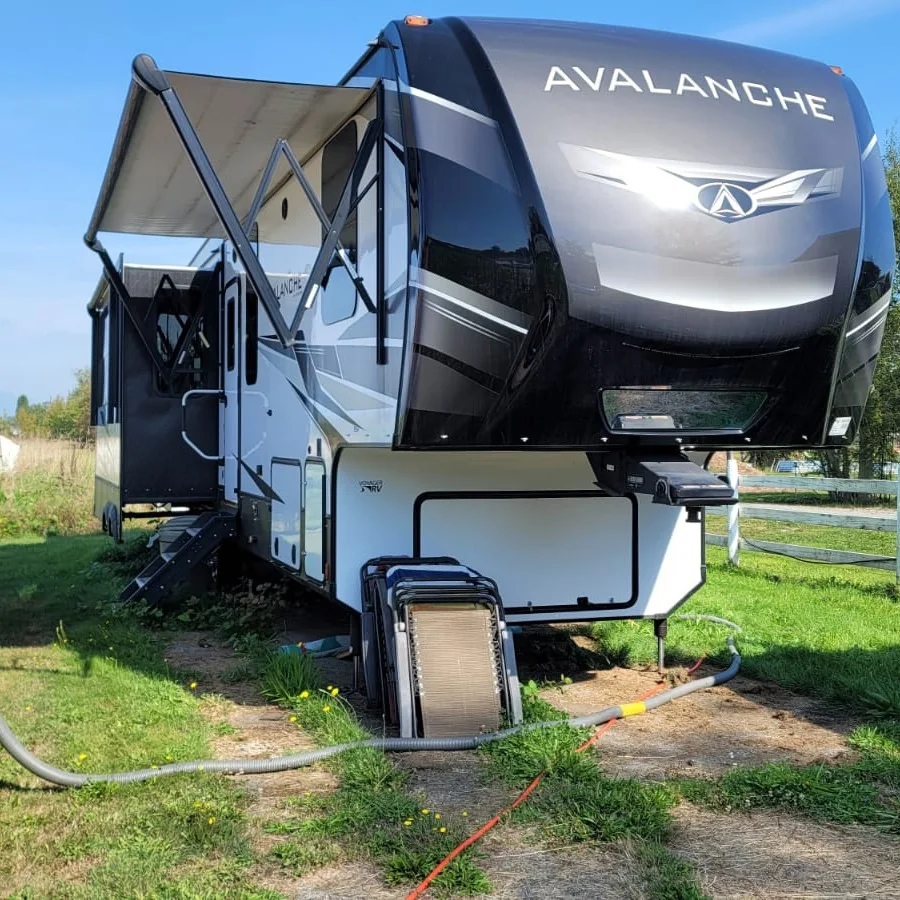
 Homes • campgrounds • parked rigs
Mobile RV pump-out
The core service page for routine on-site emptying at homes, campgrounds, storage lots, and parked RV locations.
View mobile pump-out pageMobile service · Lower Mainland
We come to parked RVs at homes, campgrounds, storage yards, and event sites, so you can empty black tanks, grey tanks, or both without moving the rig to a dump station first.
Tank already full or RV unusable? Call for faster triage.

Parked where? Home, campground, storage yard, or event site.
Which tanks? Black tank, grey tank, or both.
One rig or several? Single stops and grouped requests have clear paths.
How on-site RV pump-out works
Send the location and tank details once. We use those details to assess access, urgency, and the right service path before scheduling.
Start with the request formShare the city, location type, rig type, and any gate, site-number, or hose-reach notes.
Choose black tank, grey tank, both, or flag an urgent full-tank situation.
Routine, urgent, and multi-unit requests are separated so the reply can focus on the actual stop.
Service paths
Pick the clearest fit: routine pump-out, tank-specific help, urgent holding tank issues, or grouped stops.
Homes • campgrounds • parked rigs
The core service page for routine on-site emptying at homes, campgrounds, storage lots, and parked RV locations.
View mobile pump-out pageBest for owners who already know the request is black tank, grey tank, or a reset before storage or the next trip.
For owners who know exactly which tanks need attention, want a pre-storage reset, or need help with odours and messy tank conditions.
View tank-service pageUse the urgent path when the toilet is unusable, the tank is at overflow risk, or the rig cannot be moved safely before emptying.
Call 778-825-1032 for faster triageFor full tanks, toilet shutdown, overflow risk, or situations where the RV cannot stay usable without fast service.
View emergency pageFor storage yards, seasonal sites, event setups, or multiple RVs that need one coordinated service window.
View multi-unit pageGood fit for
If the RV is parked at home, at a long-stay campground, in storage, or at an event location, this section helps you quickly confirm whether the service fits. You can also branch into tank-specific service, urgent holding-tank help, or multi-unit scheduling depending on the situation.
Lower Mainland coverage
Use the service-area page or a city page for Abbotsford, Langley, or Maple Ridge if you want to confirm coverage first, then share access and timing details in the request.
City names matter, but owners usually also want to know whether driveway access, campground rules, storage-yard gates, or tighter urban parking can be handled smoothly.
Abbotsford, Langley, Surrey, and Delta for driveways, acreages, storage yards, and seasonal-site runs.
Richmond, Burnaby, and New Westminster where access notes, parking, and timing matter more.
Coquitlam, Port Coquitlam, Maple Ridge, and Pitt Meadows for parked RVs, group stops, and practical route stacking.
Review the full Lower Mainland service-area page, open the Abbotsford, Langley, or Maple Ridge RV pump-out page, open the Burnaby route-fit page, compare storage-yard and multi-unit service or black and grey tank service, or send your location and access details now.
FAQ starter
You can request black tank service, grey tank service, or both in the same visit.
A tank that is already overflowing, a toilet that can no longer be used, strong waste odours tied to a full holding tank, or an RV that needs to move but cannot do so safely before emptying.
Yes. Campgrounds, storage lots, seasonal sites, driveways, and event locations are all normal service situations to mention in your request.
The most helpful details are the city, exact location type, rig type, which tanks need service, and anything important about access or timing.
Use the form for routine requests and schedule planning. If the tank is full and the RV cannot be used or is actively at risk of overflow, call for faster triage.
Start with the city, RV type, tank situation, and any gate, driveway, campground, or storage-yard access note. That is usually enough to confirm route fit and the best next step.
Main request path